What to Bring
- Loose-fitting shorts with an elastic waist for clinical exam, and snug-fitting above knee shorts with an elastic waist for gait analysis. Girls should bring a sleeveless tank top. Please avoid clothing with any reflective markings.
- Any braces and walking aids (such as crutches, walkers, or canes), if applicable.
- Closed-toe shoes used for walking with and without braces.
- Due to the length of the appointment, please bring a water bottle, snacks and a familiar item, such as a favorite small toy or book.
Arrival and Check-In
Please arrive 30 minutes before your scheduled appointment to allow time for Registration at Patient Access. Once you have checked in at Patient Access, you will be directed to the Nicklaus Children's Hospital Gait and Motion Analysis Lab in the Medical Arts Building. Use the elevator across from the Publix Pharmacy to go to the third floor, past Neurology to access the Gait and Motion Analysis Laboratory.
What to Expect During the Gait and Motion Analysis
Every child moves in their own way—and this visit is all about understanding your child’s unique walk. During their visit to the Gait and Motion Analysis Lab, your child be comprehensively evaluated to help determine the best treatment for their specific needs. We’ve designed the experience to feel more like a guided activity than a medical test.
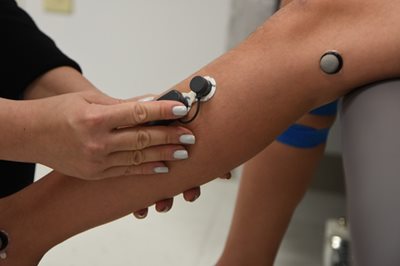
Small reflective markers and electromyography (EMG) sensors are placed on your child’s skin. These are completely painless and often spark curiosity. As your child walks, cameras follow the markers like a motion-capture system, while sensors quietly track which muscles are doing the work. Some kids think it feels like being part of a video game or science experiment.
Video Recording
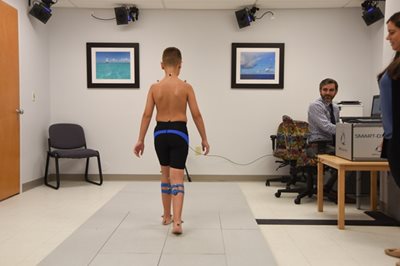
With the markers and EMG sensors on, your child will take a few walks across the room while we capture video from various angles. There’s no pressure to “perform", just natural walking. These videos help us notice small movement patterns that are easy to miss when visually assessing. The video may also serve as a reference to help our team evaluate the treatment’s effectiveness.
Physical Examination
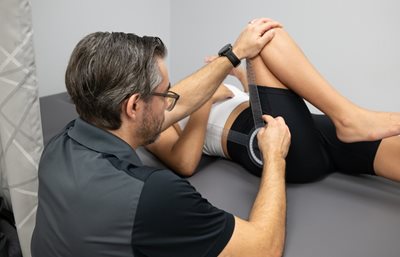
A physical therapist will conduct a physical exam to evaluate your child’s bony alignment, range of motion, spasticity, motor control, and strength. Measuring these attributes will provide additional insight regarding their movement.
Results and Treatment Plan
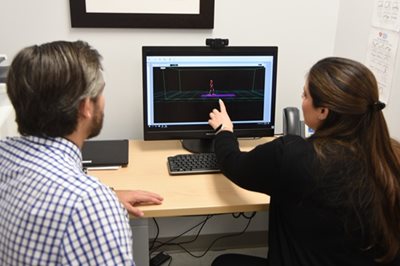
After the session, we bring everything together—patient history, videos, objective data, and clinical measures. A team of specialists including an orthopedic surgeon, neurologist and physical therapist will meet and review how your child's movement to build a care plan tailored specifically to them. The results will be communicated to you and your referring physician so that you feel confident with the findings, recommendations, and next steps.
Checking Progress Over Time
As your child grows or begins treatment, we may repeat the evaluation. This helps us see what’s improving and where adjustments might help.